
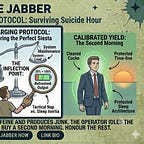

Spend enough time in any high-output corporate environment or creative studio, and you will witness a bizarre daily ritual. Right around 2:00pm, the energy evaporates. The atmosphere turns heavy. The keyboard clicks slow down.
In tactical circles, this post-lunch window is known as suicide hour.
It is the exact moment when your internal circadian clock drops its baseline temperature, your lunch digests, and your cognitive processing power takes a massive dive. The amateur sees this dip as an enemy. They try to wage war against their own biology by slamming a second or third coffee, forcing themselves to stare at a glowing monitor while their brain fires on half its cylinders.
They are burning expensive cognitive fuel just to stay awake, producing low-leverage, error-ridden work.
The sovereign operator doesn’t fight the crosswind. They drop into the pit lane and execute the recharging protocol.
The 30-minute boundary line
A perfect siesta is a game of tight margins. It requires strict parameters to ensure it remains a tactical advantage rather than a systemic liability.
If you sleep for an hour, you slide straight into deep REM sleep. When the alarm goes off, you wake up disoriented, groggy, and functionally useless for the rest of the afternoon. Even worse, that deep sleep eats into your night-time ‘sleep pressure,’ meaning you won’t be tired when your head hits the pillow at midnight. You’ve traded a brief afternoon dip for a week-long insomnia spiral.
The sweet spot is 30 minutes.
Thirty minutes is long enough to drop your heart rate, clear the mental cache, and reset your cognitive processors, but short enough to prevent your brain from slipping into the deep sleep architecture. It doesn’t eat into your day; it buys you a second morning.
Timing the window
You cannot run this protocol whenever you feel like it. The operational window is incredibly narrow:
The lower bound (post-lunch): You must wait until the lunch hour is cleared. Let the initial digestive wave hit so you are riding the natural dip, not forcing it.
The upper bound (the hard stop): The protocol must be executed before 3:30pm. Anything later starts bleeding into your night-time sleep latency window. If you snooze at 5:00pm, you are effectively stealing tomorrow morning’s energy to pay for this evening’s exhaustion.
The tactical pause
If you can’t actually fall asleep, it doesn’t matter. The protocol functions perfectly well as a non-sleep deep rest or mindfulness loop. It is about sensory deprivation.
Close the blinds. Put on the noise-canceling headphones. Turn off the communication arrays. Let your system idle for exactly half an hour.
You aren’t quitting the day; you are maintaining the machinery so you can finish the sprint clean.
Love yourself. Keep jabbering.


